
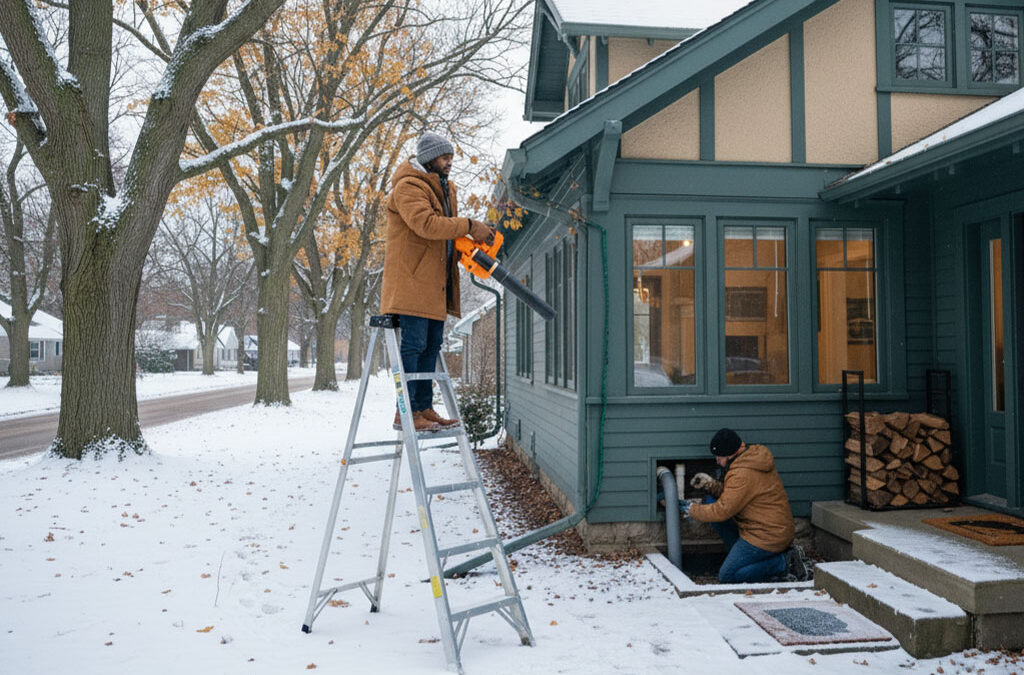
Michigan winters are brutal and unpredictable. Ignoring essential winter preparation is not just uncomfortable; it can lead to thousands of dollars in damage from burst pipes and ice dams, while also hiking your heating costs.
This checklist focuses on the three most critical areas of your home to ensure you stay warm, safe, and efficient all season long: Your Furnace, Your Plumbing, and Your Exterior Shell.
1. The Engine of Warmth: HVAC and Furnace Preparation
Your furnace is your home’s most vital winter defense. Don’t wait until the first blizzard for a costly breakdown.
- Schedule a Professional Tune-Up: This is recommended annually before the heating season begins. A technician will inspect the heat exchanger (for dangerous CO leaks), lubricate parts, and ensure your system runs at peak efficiency to handle continuous winter operation.
- Replace the Air Filter: This is the simplest DIY task. A clean filter allows your furnace to breathe easily, preventing the system from overworking itself and improving efficiency. During peak winter use, make it a habit to check and replace your filter monthly.
- Test and Install Carbon Monoxide (CO) Detectors: Furnaces can produce carbon monoxide if something goes wrong. Test all detectors and replace batteries now. Place detectors near every sleeping area for maximum safety.
- Clear Exhaust Pipes and Vents: If you have a high-efficiency gas furnace, the outdoor exhaust pipes must be kept clear of snow, ice, or debris to prevent a dangerous carbon monoxide backup.
- Clear Registers and Returns: Ensure no furniture, rugs, or curtains are blocking vents. Restricted airflow forces your furnace to work harder, directly increasing your utility bill.
2. The Frozen Threat: Protecting Your Plumbing
Burst pipes are the most common and expensive Michigan winter insurance claim. Prevention is simple and cheap compared to the cleanup.
- Disconnect and Drain Outdoor Hoses: This is critical. First, shut off the dedicated indoor valve for your exterior spigots, and then open the outside spigot to drain any residual water from the line. Leaving a hose attached can trap water, allowing ice to form and burst the pipe inside the wall.
- Insulate Vulnerable Pipes: Focus on pipes in unheated areas like basements, crawl spaces, and attics. Use inexpensive foam pipe insulation sleeves (available at any hardware store) or approved heat tape for extra protection on long runs.
- Seal Air Leaks Near Pipes: Use caulk or weather-stripping to seal any holes (where utility lines, cables, or dryer vents enter the home) that allow frigid air to hit exposed plumbing.
- Emergency Cold Snap Protocol:
- Open Cabinet Doors under kitchen and bathroom sinks located on exterior walls to allow warmer air from your living space to circulate around the pipes.
- Run a Small Drip of cold water overnight from faucets served by exposed pipes. Moving water, even at a trickle, is far less likely to freeze than still water.
- Set Your Thermostat no lower than 55°F if you leave town. This ensures enough ambient heat to protect vulnerable plumbing.
3. The Exterior Shield: Roof, Gutters, and Home Envelope
Prevent leaks, major damage, and energy loss caused by ice, snow, and wind.
- Clean Your Gutters (Thoroughly): Clogged gutters are the primary cause of ice dams. Clear all leaves and debris now, and then check them again after all the leaves have dropped. Ensure your downspouts are free-flowing and direct water at least three feet away from your home’s foundation.
- Trim Overhanging Branches: Heavy ice and snow can cause weak or dead branches to snap and fall, potentially damaging your roof or siding. Trim back branches that hang close to your roofline.
- Seal Cracks and Gaps: Use new weather stripping around doors and silicone caulk around windows and any penetrations (like vents or wire entries). Sealing these drafts is your best defense against heat loss and is the quickest way to lower your heating bill.
- Inspect Attic Insulation and Ventilation: Proper insulation keeps heat in your living space. Crucially, proper ventilation keeps your attic floor and roof deck cold. If your attic is too warm, it melts snow, which refreezes at the cold eaves, creating damaging ice dams. Check for even insulation coverage.
- Check Roof Shingles and Flashing: Inspect your roof (safely, from the ground with binoculars) for any missing, cracked, or curled shingles. Repairing these small issues in the fall prevents them from becoming major leaks when the snow and ice arrive.
Conclusion: Enjoy a Worry-Free Michigan Winter
A few hours of diligent preparation now saves you days of stress and potentially thousands of dollars in emergency repairs later. Start this list today to ensure your Michigan home stays warm, safe, and efficient all winter long!